
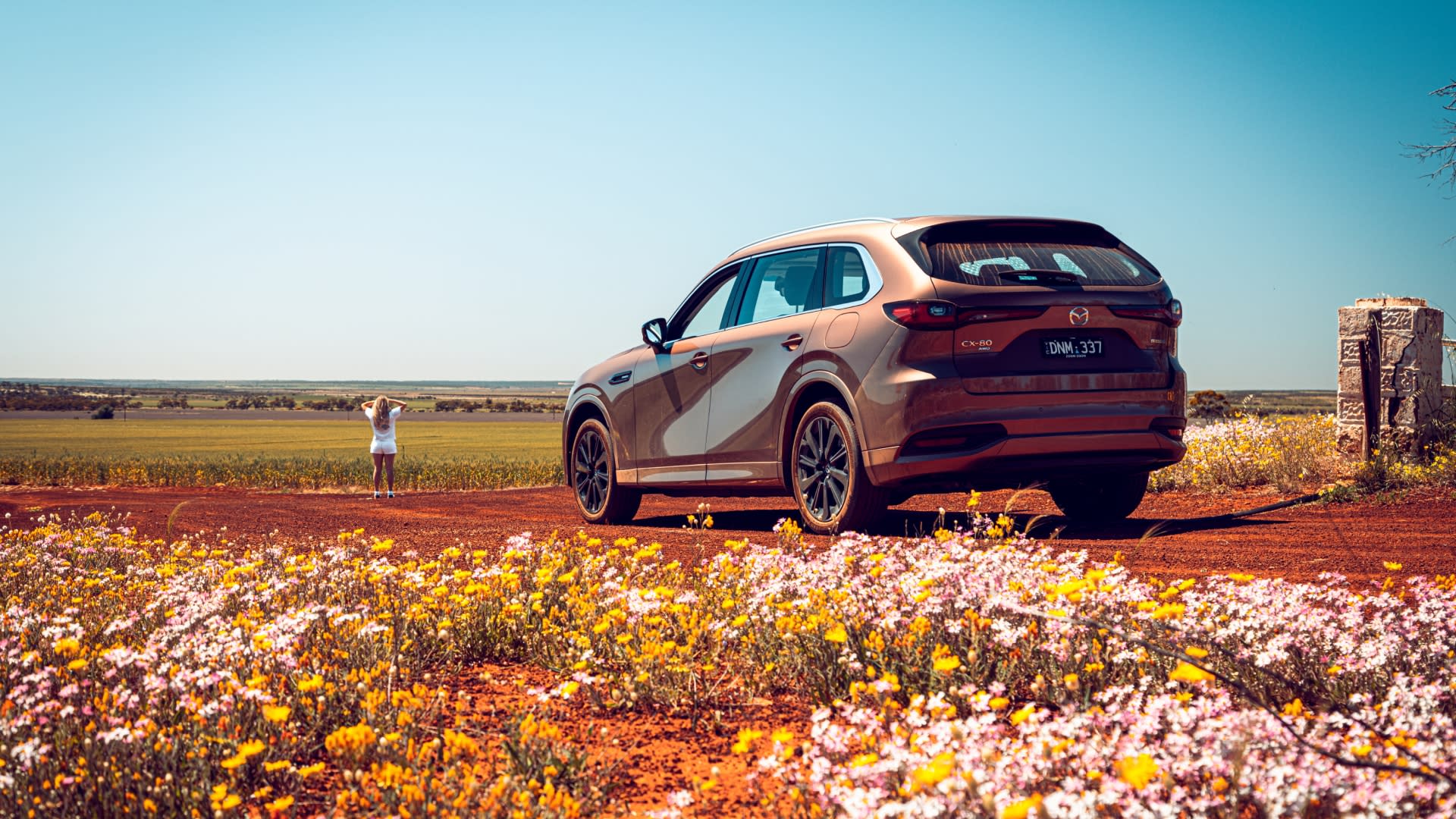
Mazda CX-80 on a Wildflower Adventure in WA
Mazda CX-80 on a Wildflower Adventure in WA
Story and photos by Thomas Wielecki
“Wow, this is boujie!” Matilda chirps, before promptly falling asleep. My daughter, who’s signed on for this floral-flavoured adventure in Western Australia, is recovering from her Year 11 formal the night before, slept all the way from Sydney to Perth and climbed into the boujie and immense Mazda CX-80 with a hairdo almost as large, immaculately lacquered nails and a fake tan that makes her teeth and eyes glow.
Just as an aside, ‘boujie’ has various spellings and different meanings, but for Gen Zs on the east coast of Australia it translates to “fancy” and “expensive”.
September is generally a good time to witness WA’s wildflower season within a manageable distance from Perth (manageable distances are different for those who live in the vast West, of course).
The disturbingly helpful woman at the King’s Park information centre had froth in the corners of her mouth and dilated irises as she wound up over wildflowers. “You can see a lot of our flowers here in the park,” she enthused, pointing out the window, and alerting us to the fact that, of the 13,000 documented species in WA, there are only about 3,000 natives in her park.
“You HAVE to see the wreath flowers!” She’s getting a bit hysterical.
Despite the quality of the King’s Park flowers, it’s a bit like going to the zoo to see mountain gorillas rather than finding them in the mist. I wanted to dive into their natural, untamed habitat; to go on a proper trek. I wanted Matilda to experience the mysteries and raw beauty of WA. Above all, I wanted to earn the privilege of seeing wild flowers in the wild.

We meet a wide-eyed couple from the east coast. They’d just finished a month long north-to-south pilgrimage to see the flowers and scrolling through a phone they show us countless photos of vistas drenched in purples and pinks. “This was just a few days ago around Coalseam.” I get excited; that’s only a day’s drive from Perth.
At the Wildflower Society headquarters, Kerry, today’s custodian, suggests a north easterly direction. She mentions places like Kalbarri, Pinda, Morawa, Mingenew, Paynes Find and, reassuringly, Coalseam. “You’ll see them all around there, but it’s not like the Botanic Gardens, you’ll have to ask the locals,” she warns.
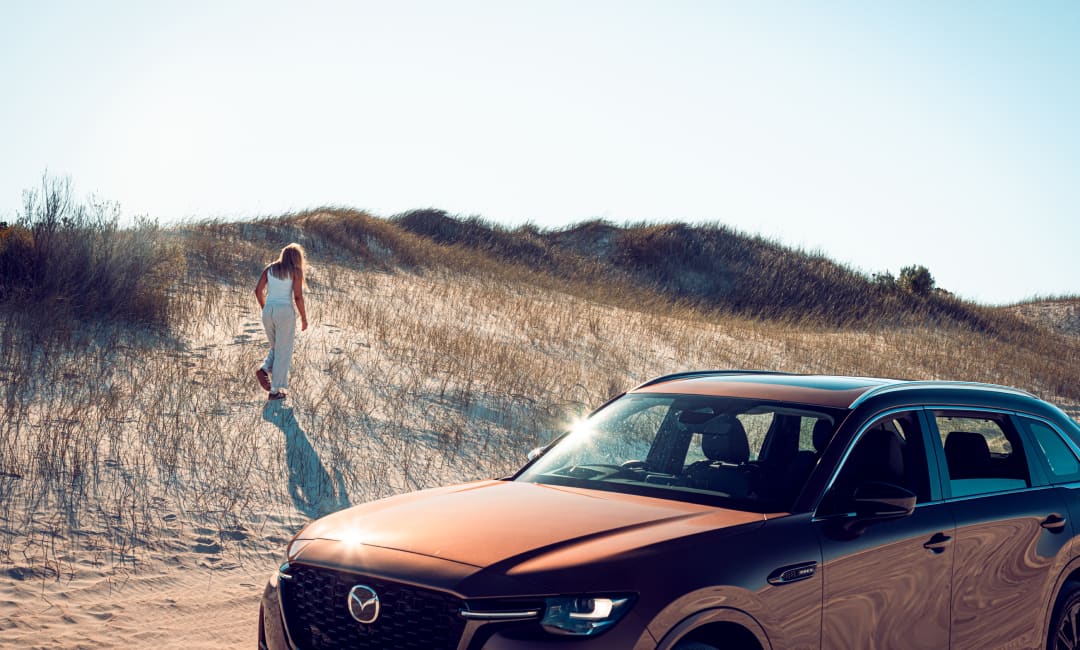


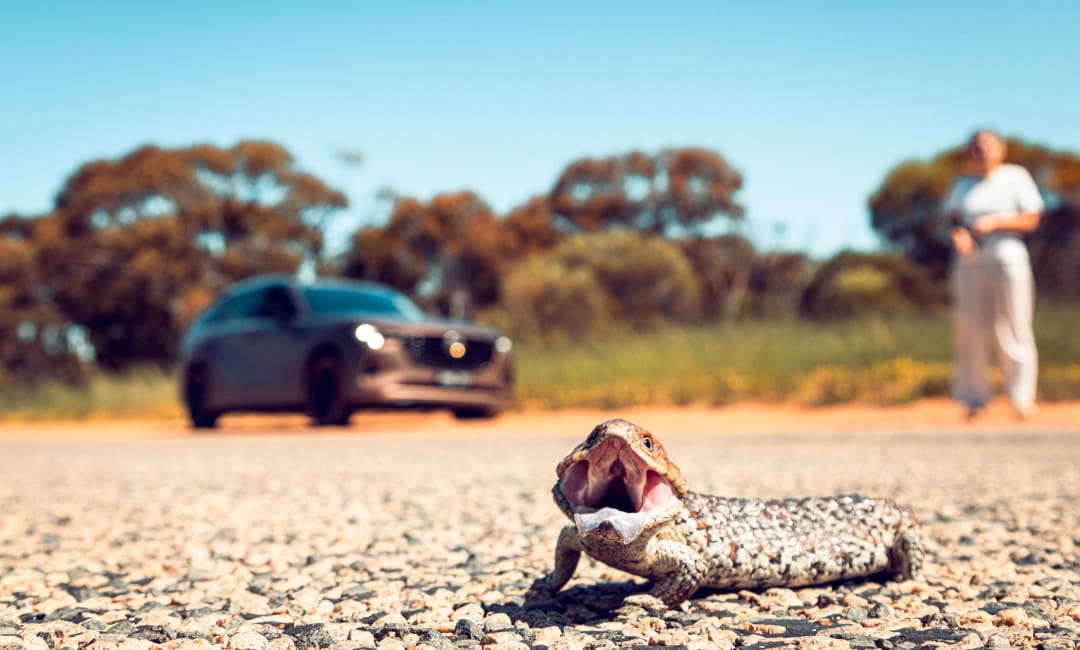
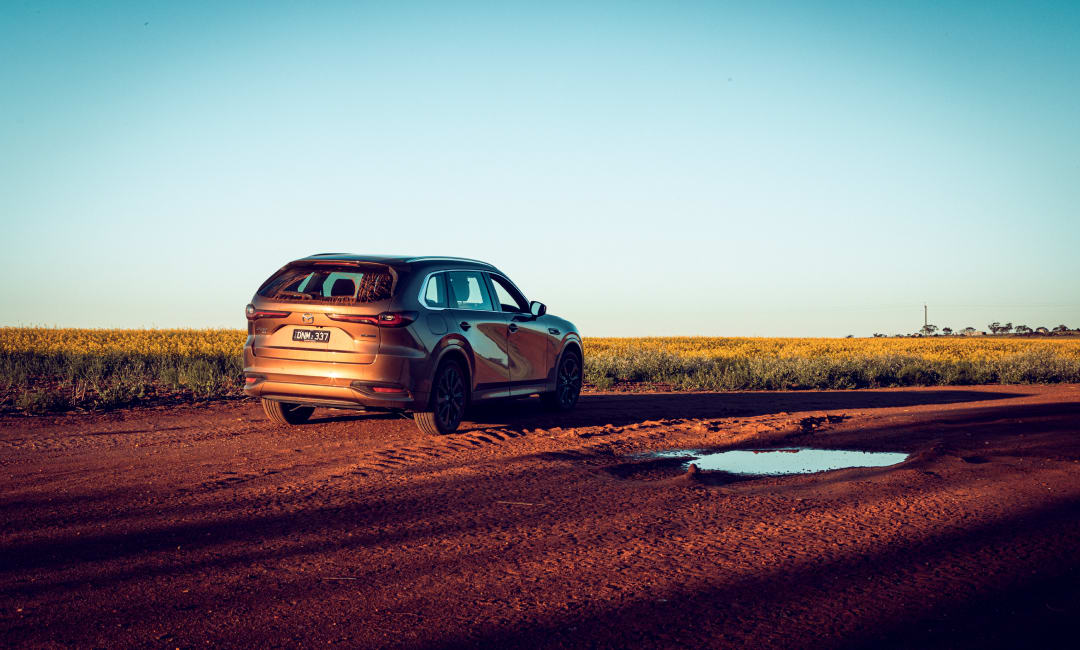
Cosseted in the plush comfort of our CX-80, which offers far more space and storage than the two of us could ever need, we roll north out of Perth, past immense new housing developments. Cruelly, and weirdly, the Indian Ocean Drive skirts the Indian Ocean without so much as a glimpse of it. We’re either too far from it or a line of dunes obscures it. In Lancelin, we turn inland and point our Mazda north onto the Brand Highway.
By dusk any contact with the outside world is lost. The last bar of reception vanishes. We’re on our own. The CX-80’s headlights easily melt the blackness, but there’s not much to see other than the road ahead. It’s hypnotic.
The satnav provides succour, but all you can see is a line for the road on a grey background, and when you zoom out, the shape of Western Australia fills the screen. No lines. Just the arrowhead pointing in the direction we’re moving. It’s like looking at the world through a keyhole.
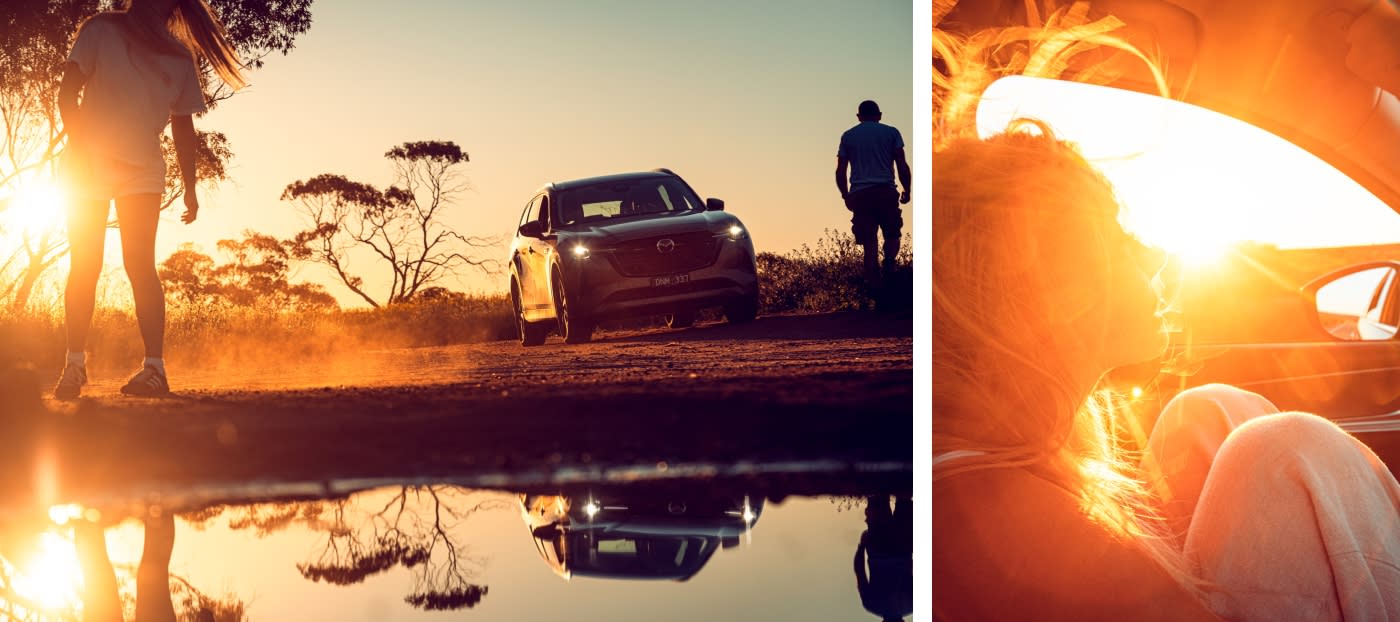
I pull up somewhere along this nameless road. I kill the engine, switch the lights off and step outside. Matilda is confused. “Where are you going?”
“I want to show you something.”
For a long while we stand in dead silence in the middle of the road with heads cranked to the sparkling blackness. It feels like we are the last two people in the world.

“Dadda, the stars are singing,” Matilda whispers, in her quietest voice.
I can barely see through the bug-spattered windscreen when we finally roll into a dimly lit Morawa, 350km north of Perth, at midnight. The morning wakes bright and empty as wind plays with the tall grass and crows disturb the peace. Morawa is just a pimple in the wheatbelt, like one of last night’s stars in the huge void of WA.

The Mazda badge on the front grille is almost entirely obscured by insect corpses. I count 38 on a random square centimetre. Given that the CX-80 is 171.4 cm high and 189 cm wide, its frontal area works out to be 32,395 square centimetres. That’s 1.231 million bugs without counting the mirrors. Roughly.
Matilda wants breakfast, the car wants fuel, and here I am nerding out about irrelevant statistics. At the only servo in town, which also doubles as an eatery; the Wildflour Cafe, we meet Jamie - a retired banker from Perth who wanted a simpler life - who runs both on his own.

“I’m busier than ever but I don’t have to deal with…,” (what he said wasn’t exactly the most safe for work phrase, so I’ll leave that up to you to fill in the blank) is his succinct summary, but after 10 years out here I detect a tinge of loneliness. He sends us to the information centre in the town hall to seek flower advice.
We are greeted by Leonie, a charming, mature woman in a red floral dress and cowboy boots. When I mention wildflowers her smile triples. “I can show you wildflowers!” Our basic map of the area around Morawa begins filling up with arrows and road names. “This’ll do you for the day,” she beams.
We turn right off the highway to follow the permanent blue sign to “Wildflowers. Old Camp”. Just beyond the turn-off, we are plunged into an omelette. Yellows and whites cover every square inch of flat ground. Bushes and trees stick out of the blanket of flowers like garnish and the blue of the sky is made deeper by the glare of the everlastings in the dazzling sunlight.
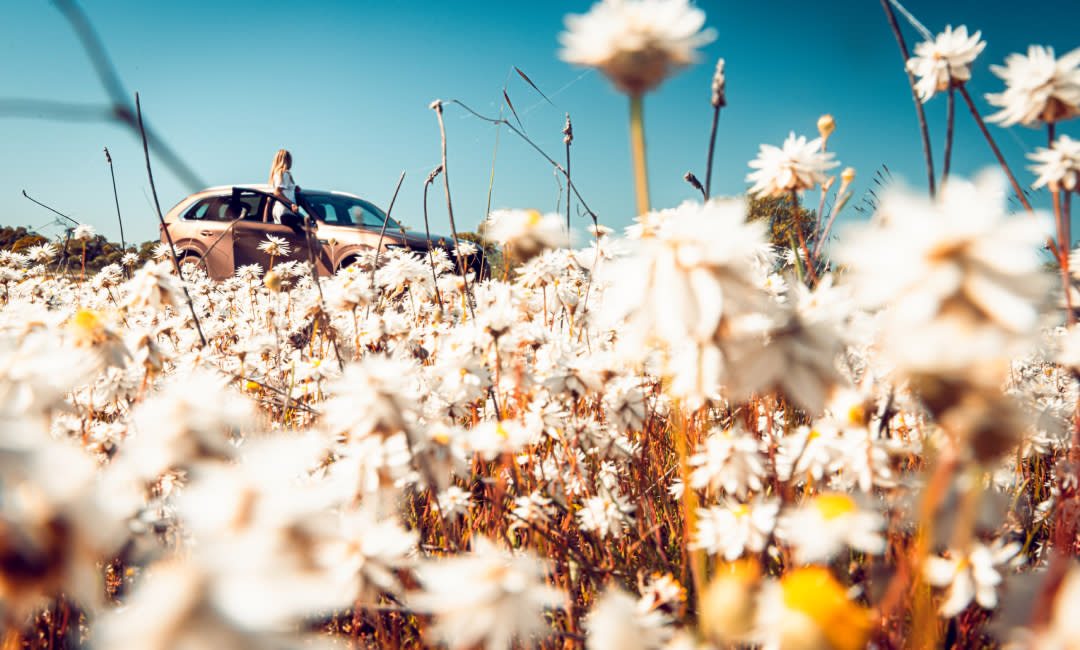
Masterfully dressed up, this land of primary colours can be brutal. It’s harshness softened only by the haven of the CX-80’s cocktail-lounge cabin; an escape from the flies, the sun and the prickles.
Hypnotised by the environment, one can easily lose track of reality. I was deep inside one of those reverie moments when I heard Matilda’s screams. “Dadda, Daddaaa!!”
A loud hiss, followed by a cloud of red dirt rudely invaded my bubble. With a rumble, the beast emerged; a giant white cruise ship on wheels. It slowly rolled past us, blocking the sun for a while and disappearing into the scenery. I manage to snap a glimpse of the colourful writing on the side: ‘WA Wildflower Tours’. Even out here we’re not safe from tourists.

“Aren’t we tourists?” asks Matilda. Yes, but we’re doing it in boujie style. And we’re not on a leash.
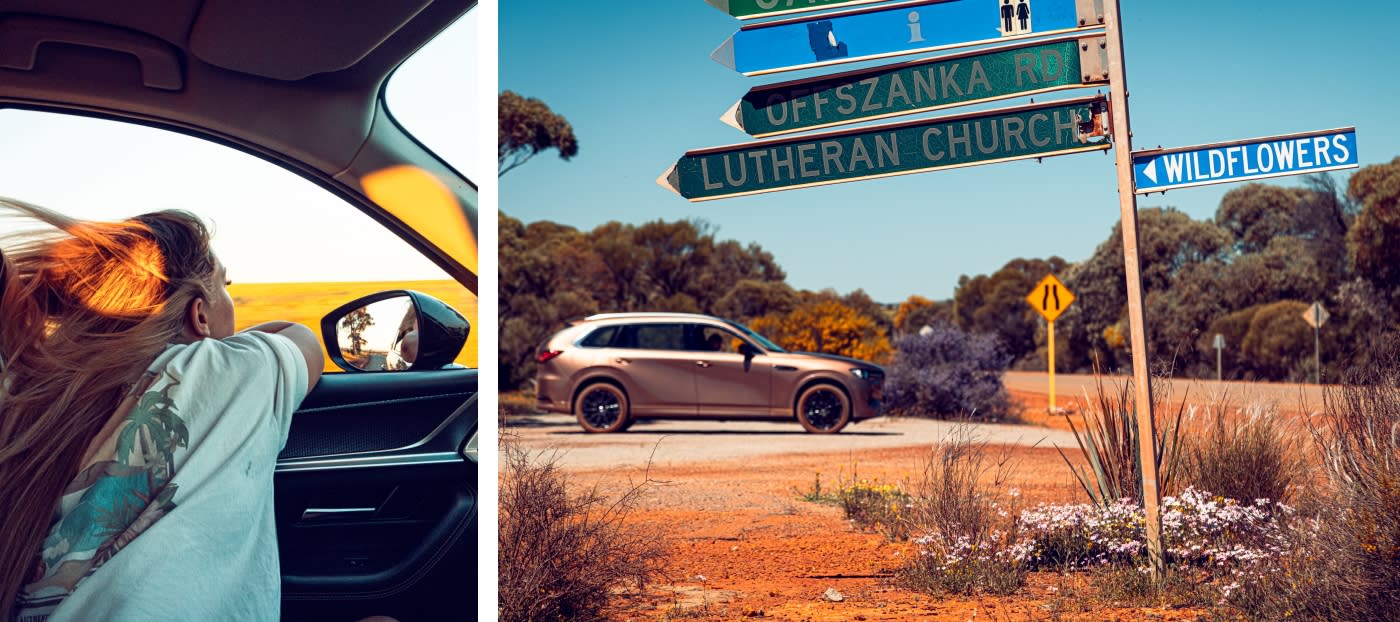
To escape, we follow on to the next “X” Leonie marked on our map. And it reads like directions to a secret from a fairy tale: turn right into Offszanka road, cross the railway line, go past the old telephone box in shut-down Canna, and “not far” past the gentle right bend onto North East Canna road, where we’ll find the coveted wreath flowers. But there’s a but.
Apparently a favourite place for wildflowers is on the road verge, where they can score sunlight, gravelly soil and as much moisture as possible. And on this particular stretch of dirt, the verge falls at least three feet below road level, where any precious water will flow. We drive up and down, and see nothing.

Matilda suggests I slow down and get closer to the ditch. Then, at walking pace, she spots one, then another, then a colony. Talk about hidden treasure, the wreath flowers are every bit as spectacular as our Kings Park enthusiast pledged.
By the end of the day, Matilda’s fake nails have chipped off, her hair is tangled and fake tan coated by red dust. She’d swallowed a few flies and, more importantly, realised how big Australia can be in a world where everything is at her fingertips.
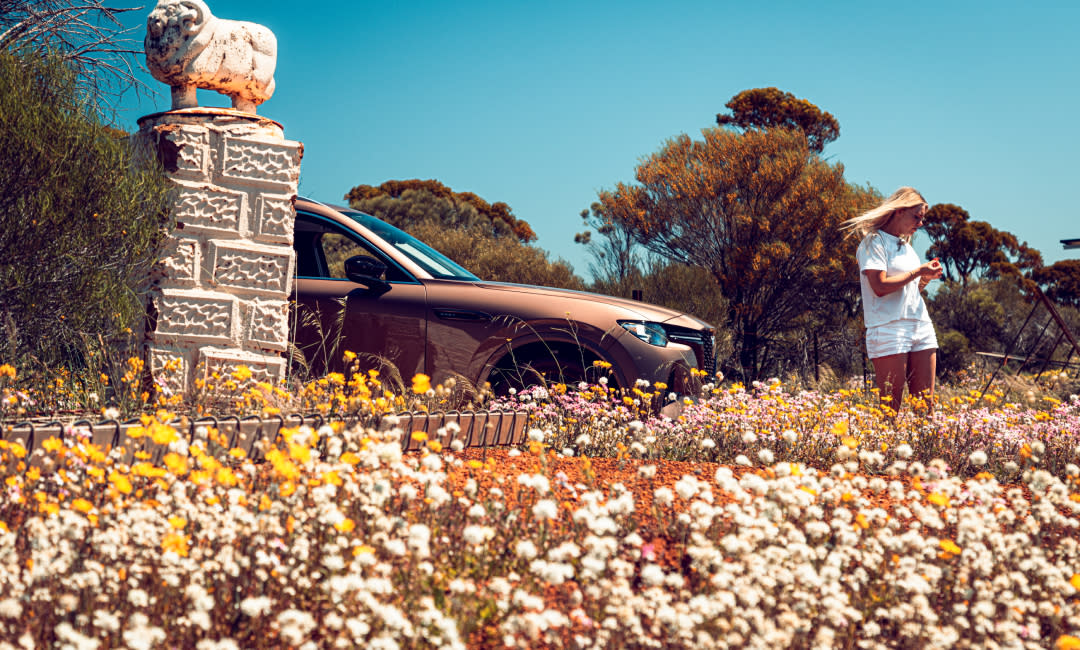
The following day we stop in Wubin where, inside the museum, two dry blokes sit guarding the town’s dry rock collection. They tell us about a couple of wild flower spots not far away and sure enough we strike gold again. “Have a look outside,” they sing in unison. The museum carpark and disused railway line are covered in wildflowers. These little oases thrive everywhere. They have to. They’ve been squeezed onto their own islands by large crops, roads and highways.
In Dalwallinu we fuel up and meet Fatman and Colin. Fatman is here as a runaway from his previous life. Colin is 83, born and bred here, like his father and grandfather. “That wheat bin over there is named after me father,” he boasts.
When we get onto wildflowers it’s like he’s talking about his children.
“Spider and donkey orchids were everywhere, not any more,” he sighs. “Back in the 60s, nobody noticed wreath flowers. Now everybody wants to see them. It wasn’t until about the 80s that people started coming here to look at flowers. Plenty of pom poms and paper flowers (everlastings) around Wubin Rocks. But I haven’t seen the Morrison or cauliflower bush for a few years.”

Somehow, incredibly, new species are described and named every year. WA is so vast and isolated that it is impossible to know how many undiscovered wildflowers are happily growing where human eyes have not looked.
Out here we find flowers that don’t look like flowers at all. Like the Large-articled Samphire (Tecticornia bulbosa) for example. Matilda pointed out how it was made up of “juicy little pillows”. Its stems looked like a string of little grey-green grapes.
When I described it to Colin he informed me that it’s actually a wild flower, native only to this little corner of WA. It is a vulnerable species, first identified on the 29th of April 1979. I looked it up. And it did not look like a flower at all.

We slice through infinite wheat and canola fields with no effort. The CX-80 rides the back roads with confidence and comfort and on a trip like this the comfort of the seats is a blessing. Matilda and I love to keep the windows down at speed, to smell the flowers and to taste the air.
A week after Matilda and I returned home I called Leonie to thank her. “A couple of weeks before you were here a lady from a nearby property contacted me about a colony of flowers. I’m always interested in new spots, so I went. There was this dear little trigger plant I’d never seen before. It was a tiny little thing, like a thumb nail.”

Turns out that Stylidium scintillant, commonly known as the Glistening Triggerplant, was first named in 2012. Since then there have been scant sightings. It is a threatened species which means there are fewer than 300 in the wild. And this was a new population, out there in Morawa and we missed it.
When I said goodbye she sighed and said: “You should have come to Morawa a week earlier. The pinks and purples were amazing. Matilda would have loved it.”
Peak season for wild flowers can be elusive and slippery and I’ve been trying to catch it for years, so I know there’s definitely an element of luck. It’s all dependent on when and where it rains, and how much, but having seen, smelled and sensed so much on this trip, I’m keen to try again.

